How the British Navy brought Slavery to an end in the 1800s
JJ Heath-Caldwell SpeakerNet Sponsor
- Regions:
- Surrey, Kent, East Sussex, West Sussex, Oxfordshire, Buckinghamshire, Berkshire, Hampshire, Isle of Wight, Dorset, Wiltshire
- Notice Period:
- Regular (more than one month's notice)
- Type:
- Professional
- Fee:
- Free
- Category:
- History
- Updated:
- 22nd November 2026
- Tagged:
- Slave Abolition Royal Navy
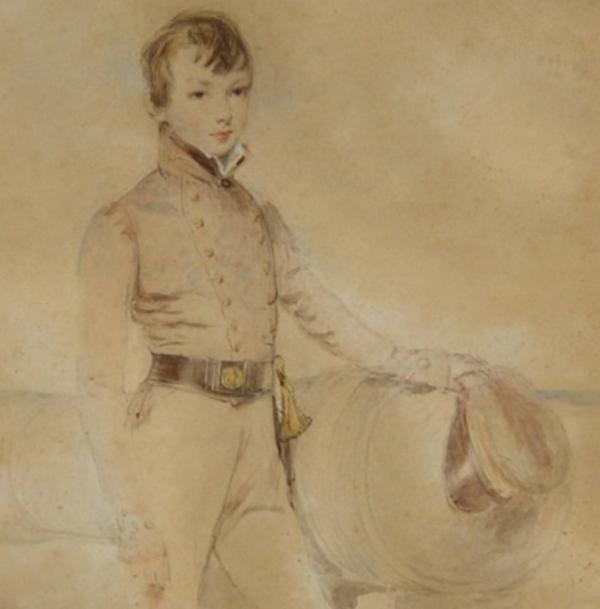
This talk gives an overview of the history of slavery (which was the status quo in all early civilizations). It then goes on to cover the advent of the Anti-Slavery movement in the UK and the uptake in support from the British people and the British government. In 1807 the UK banned the trade in slaves and in 1833 the UK banned the ownership of slaves across most of the British Empire. To make this happen the British government bought all the slaves. This cost the British tax payer a colossal amount of money but it did not end there. Further money was spent funding the British Navy to patrol the high seas and enforce the ban. This was done at great cost and large numbers of British Sailors were killed carrying out this dangerous work.
One sailor who played a significant role in this was Leopold Heath who in the 1830s spent time in the Malacca Straits and Borneo hunting down pirates and ending their business model of theft and slave taking. In the later 1830s and early 1840s Leopold spent time off the coast of South America hunting slavers. In the late 1840s he spent time hunting pirates off the West Coast of Africa. The last major event in ending the Trans-Atlantic slave trade was the attack on the slave trading port of Lagos. Leopold led the attack and he was the first to land on the beach. Lucky for him he survived but many of his colleagues did not. By the late 1860s he was a Commodore and he led the anti-slavery work around the East Coast of Africa, centred on Zanzibar and Oman. Many sailors went before him and many followed him but he was one of the exceptional people who was totally focused on making things happen. He got little thanks for his efforts. He got no recognition and today he and most of his colleagues in the Royal Navy are unknown to history.
The anti-slavery movement was one of the greatest events in the history of civilization. The British people did not support it to make money. It was not a business model. The British people did it because it was the right thing to do.
More information can be found at https://jjhc.info/heathleopold1907.
About JJ Heath-Caldwell
I was born and brought up in New Zealand in the 1960s and 1970s. After studying physics at University I left on a working holiday and came to the UK where I took up a job as an electronics engineer with Marconi Radar Systems Ltd. The company was based in Chelmsford but I was in the Field Services Dept and my work took me to Portsmouth for a few years and then Egypt and the Sultanate of Oman.
I continued to work in the British electronics industry throughout the 1980s and 1990s after which I changed careers and became an internet entrepreneur founding the company Local Surveyors Direct which is a family of price comparison websites for Building Surveys and other property services (www.localsurveyorsdirect.co.uk).
I have always been interested in family history and history generally and have written a book History of the World. I have also written a book about growing up in New Zealand in the 1960s & 1970s and a book about my time in the 1980s. More info can be found on my website www.jjhc.info .
My other regular activity is as a member of Winchester Rotary Club where I am one of the organisers of the Clarendon Marathon (www.clarendon-marathon.co.uk).
I prefer giving talks in person. Happy to travel to locations in Hampshire and the surrounding area. I will also give talks online.


Other Talks on SpeakerNet by JJ Heath-Caldwell
- History of the World as seen through my family library
- James Caldwell: Protégé of Josiah Wedgwood
- Anne Marsh Caldwell (1791-1873) the Victorian author of women’s novels.
- A light overview of the English in India from the early 1600s through to 1947
- The Clarendon Marathon: Salisbury to Winchester
- How I created a successful internet company
- The Life of Adm Sir Leopold Heath (1817-1907)
- Two Years in the Sultanate of Oman 1982-1984
- Growing up in New Zealand in the 1960s and 1970s
- Becoming a Grownup in the 1980s.
- What went wrong with British Engineering?
- James Heath the Engraver 1757-1834
Send a message to the speaker
If you are interested in this talk and wish to contact the speaker, please complete the following form: