THE HIDDEN HABITS THAT SHAPE OUR LIVES
Angelique Swallow
- Organisation:
- Alexander Technique
- Region:
- London
- Notice Period:
- Short (maybe less than one month's notice)
- Type:
- Professional
- Fee:
- Unknown: Fees depend on format and duration.
- Category:
- Life Skills
- Updated:
- 13th September 2026
- Tagged:
- Health And Well-Being | Happiness | Public Health | Psychology
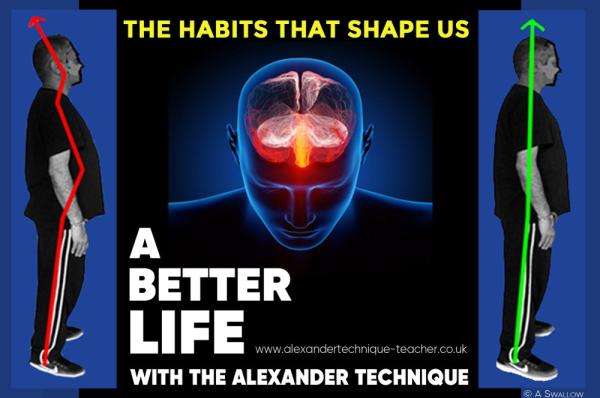
How the Alexander Technique Builds Resilience and Restores Ease
What if many of the ways we move, think and respond each day are habits we learned so early in life that we no longer recognise them as habits?
F. M. Alexander made a remarkable discovery. Through careful observation of himself, he found that the way he used himself was influencing his voice and his ability to function. More importantly, he discovered that the problem was not simply one of posture or muscular tension. The whole way we respond to ourselves and to the world is shaped by habitual patterns of use.
In this talk, we will explore the significance of Alexander’s discovery and why it remains relevant today. We will look at how habitual patterns develop, how they influence movement, breathing, coordination and our responses to stress, and how becoming conscious of these patterns gives us the possibility of responding differently.
Alexander’s work attracted the attention of scientists and physicians during his lifetime. Most remarkably, Professor Nikolaas Tinbergen, who received the 1973 Nobel Prize in Physiology or Medicine, devoted a substantial part of his Nobel lecture to Alexander’s work. Having experienced the Technique himself, Tinbergen described striking changes in breathing, sleep, mental alertness, cheerfulness and resilience to outside pressure. He was particularly impressed by the sophistication of Alexander’s observational approach.
The Alexander Technique offers a practical way of investigating these hidden patterns. Rather than trying to force ourselves into a better posture or impose a new way of moving, we learn to recognise habitual responses, inhibit unnecessary reactions and allow a more coordinated use of ourselves to emerge.
The talk will introduce Alexander’s principle of inhibition and explore his understanding of the relationship between thought, movement and the whole person. We will consider how greater awareness can change the way we respond to everyday stimuli, helping us move with greater ease, clarity and freedom.
At its heart, Alexander’s discovery was about something remarkably simple and far-reaching: we do not have to remain governed by the habits we have acquired. We can learn to recognise them, question them and develop a different way of responding.
"The Alexander Technique is not about doing more it is about doing less, more consciously. And in that space, we rediscover the ease, balance, and clarity that were ours all along."
"You translate everything, whether physical, mental or spiritual, into muscular tension." F. M. Alexander
Views: 3160 | Enquiries: 4About Angelique Swallow
"For in the mind of man lies the secret of his ability to resist, to conquer and finally govern the circumstances of his life". FM Alexander
I grew up in the ski resort of St. Anton am Arlberg, Austria. My family ran a B&B, welcoming people from many backgrounds. This gave me a rich experience observing and connecting with people from many different countries, cultures and beliefs.
With few opportunities beyond the tourist industry in my hometown, I set out to broaden my horizons and moved to Paris to learn French. Although I never quite felt at home there, the experience eventually led me to London, where I have happily lived ever since.
Before embarking on my career as an Alexander Teacher, I worked part-time for various architects, including the renowned Michael Hopkins. I also spent time honing my skills at a bronze foundry run by the artist John Somerville, casting sculptures both for myself and others.
It was during this time that I discovered the Alexander Technique, which transformed my life in ways I never thought possible. I knew then that I wanted to share this knowledge with others and become a teacher myself.
After three years of intensive training, I emerged with a deep passion for storytelling and a desire to impart the importance of FM Alexander's scientific discoveries. Through my talks and workshops, I aim to entertain and enlighten my audience, helping them understand how our habitual use of movement, thinking, and behavior affects every aspect of our lives.
My experience & health benefits learning and practicing the Alexander Technique:
I had my first Alexander Lesson in my mid-twenties, because of experiencing constant aches and pains two years after a shoulder operation for reoccurring dislocations from a skiing accident. All my attempts at finding a solution, which included running and other sporty activities, only resulted in aggravating the situation and within a short time, I was also in pain during the night and at rest.
I was fortunate enough to catch the last 20 minutes of a Channel 4 Documentary about FM Alexander's scientific discoveries. I immediately realised that the cause of my pain was my habitual way of moving and how I held myself. I found a teacher the next day and have never looked back. Becoming pain free within a short time made me a dedicated student and eventually a passionate teacher.
Experiencing no pain whilst performing all my daily activities, from heavy lifting to sitting for hours at a computer was life-changing. I started to experience not only physical, but also deep emotional well-being, that I lost during my development from childhood into adulthood. I still today feel privileged to have found AT, as I now can enjoy ageing gracefully and without aches and pains.
I provide private lessons, run courses, and give regular public talks to share my knowledge and understanding of FM Alexander’s scientific discoveries. He was one of the great modern pioneers who discovered and understood the importance of psycho-physical unity and wellbeing. I also created and implemented an Alexander Technique curriculum for further Education training courses.

Send a message to the speaker
If you are interested in this talk and wish to contact the speaker, please complete the following form: