Women and the science of colour: a history
Emmeline Ledgerwood
- Regions:
- South East, London
- Notice Period:
- Regular (more than one month's notice)
- Type:
- Professional
- Fee:
- Paid: £90 plus travel expenses
- Category:
- History
- Updated:
- 16th October 2026
- Tagged:
- Women In Science | Art History | Museums | Science
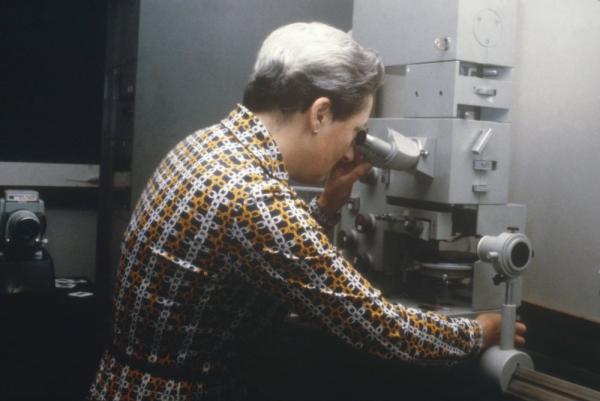
In the mid-twentieth century new research laboratories began to open up in museums, galleries and archives. Scientific investigation became an essential part of the work of cultural institutions in preserving and understanding their collections. Since then, the ongoing development of specialist, state-of-the-art instrumentation and complex scientific techniques has opened up new ways of looking at the materials and methods which were used to produce historic works of art and cultural objects.
Many of the pioneers in this field of heritage science were women who studied the properties and chemical composition of paint. Through the careers of women such as Joyce Plesters, conservation scientist at the National Gallery, whose work has helped to trace the natural and chemical history of artists' pigments, I examine the interplay between science and art history. I explain (in layman's terms) how the science works, showing how techniques and equipment have advanced over the past 75 years. I also talk about current research into the history of pigments and colour.
Richly illustrated with images of these women at work and the artworks which they studied, this talk will appeal to a broad audience.
Views: 15 | Enquiries: 0About Emmeline Ledgerwood
I'm a historian of twentieth-century Britain. As a life story interviewer, I've recorded 70 in-depth interviews with scientists, politicians and other experts in their field for the British Library's sound archive. I also write features for newspapers and magazines, with recent items appearing in 'History Today' and 'Nature Career'.
An engaging, confident and clear speaker, my talks are richly illustrated and based on rigorous historical research. I specialise in telling the unknown stories of men and women whose lived experiences illuminate broader themes in twentieth-century history. I tend to find myself writing or speaking about people who worked in scientific research, government or specialist libraries. For example, my current research explores how librarians and civil servants in Cold War Britain helped British scientists understand Russian science.
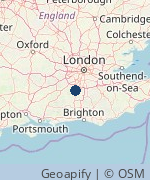
Each of my talks is accompanied by a Powerpoint presentation. I can provide laptop, projector and speaker if necessary. I live in Surrey and usually travel up to an hour to deliver a talk in person. However I am very happy to consider travelling further afield or to deliver a talk online.
Send a message to the speaker
If you are interested in this talk and wish to contact the speaker, please complete the following form: