1914: How did Europe go to war?
Mark Baglow
- Regions:
- South East, South West, East of England, London, West Midlands, East Midlands, North West, Yorkshire & Humber
- Notice Period:
- Regular (more than one month's notice)
- Type:
- Professional
- Fee:
- Expensed
- Category:
- History
- Updated:
- 29th June 2026
- Tagged:
- First World War | World War 1 | 1914-18 | Ww1
Few questions in history have generated more debate than this one. In English alone, it has been estimated that there are some 30,000 works on the origins of the First World War – and historians still cannot agree.
Was it inevitable? Was it accidental? Was it wanted?
This talk explores one of the most complex and ultimately unanswerable questions in history, and asks what we can learn from the fact that it remains so stubbornly unanswerable.
What the talk covers:
- The case for peace – why many Europeans in 1914 genuinely believed that a major war was unlikely, even impossible. The economic interdependence of nations, the growing peace movement, the rise of international arbitration, and Norman Angell's hugely influential argument that modern war simply couldn't pay
- The forces pulling towards war – nationalism, militarism, social Darwinism, and the widespread belief that struggle between nations was not just inevitable but healthy and necessary
- The arms race and the alliance systems – how Europe divided itself into two armed camps, and why the military plans of every major power made a crisis dramatically harder to control
- The decade of crises – Morocco, Bosnia, the Balkan Wars. Europe came to the brink repeatedly and stepped back each time – and why that pattern of near-misses may itself have made war more likely in 1914
- The people at the centre – the emperors, ministers and generals whose individual decisions in the summer of 1914 turned a regional Balkan crisis into a world war
- The moments it could have gone differently – at so many points between 1905 and 1914, different decisions could have produced different outcomes. The contingency of the war is one of its most poignant and fascinating aspects
The talk concludes with an open Q&A.
No prior knowledge is assumed. Suitable for general audiences, historical societies, sixth forms, A-level and GCSE students. It can also be adapted for KS3 school audiences.
Views: 154 | Enquiries: 0About Mark Baglow
I am a historian and professional trainer with a passion for making the past accessible, thought-provoking and genuinely engaging. I hold a degree in history and spent the early part of my career as a secondary school history teacher before moving into professional training and development, where I have spent many years delivering to organisations across the public and private sectors.
My historical talks focus on modern European history, particularly the causes and outbreak of the First World War and the Paris Peace Conference of 1919 — two of the most debated and consequential episodes in modern history. I am drawn to the big questions: why did Europe's leaders allow a catastrophic war to happen, and did the peace that followed make another war inevitable? These are questions without simple answers, and that's precisely what makes them so fascinating to explore.
As a professional speaker and trainer, I bring the same energy and engagement to historical talks that I bring to my day job. I enjoy encouraging debate and discussion, and I believe the best historical talks leave audiences with more questions than they arrived with.
I am happy to speak to historical societies, schools, sixth forms, and general audiences, and am comfortable with audiences of all sizes and levels of prior knowledge.
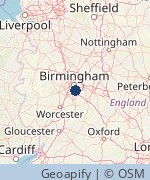
I am based in Birmingham and am happy to travel across the Midlands and beyond.

Other Talks on SpeakerNet by Mark Baglow
Send a message to the speaker
If you are interested in this talk and wish to contact the speaker, please complete the following form: